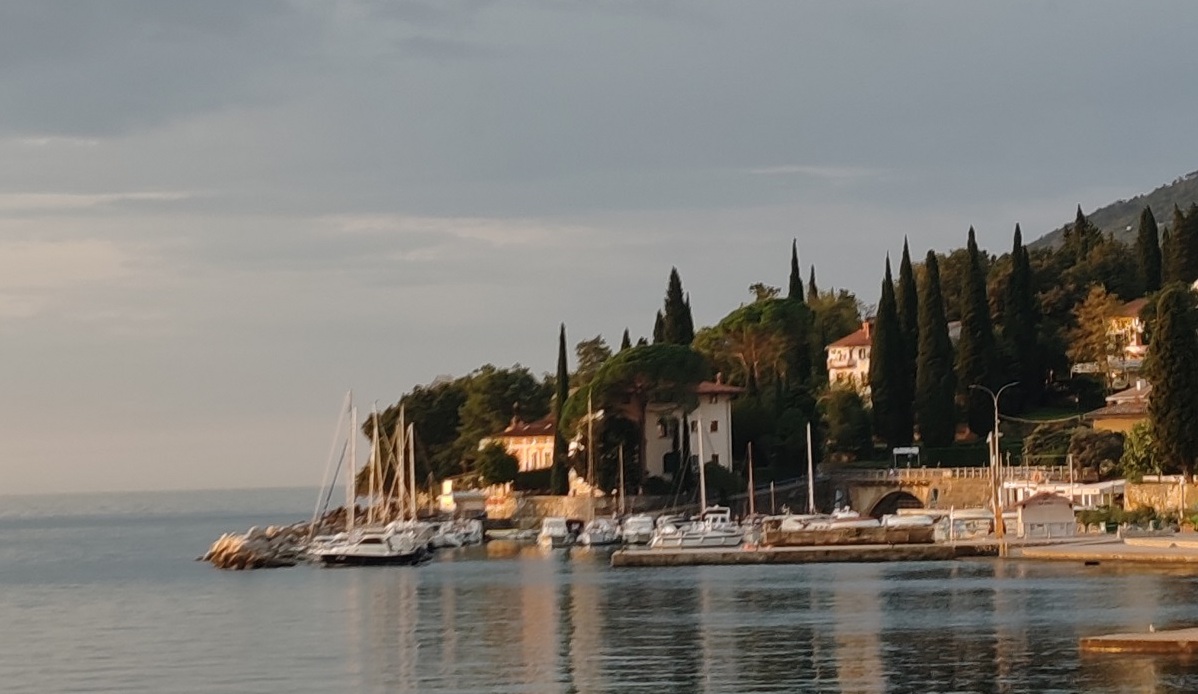

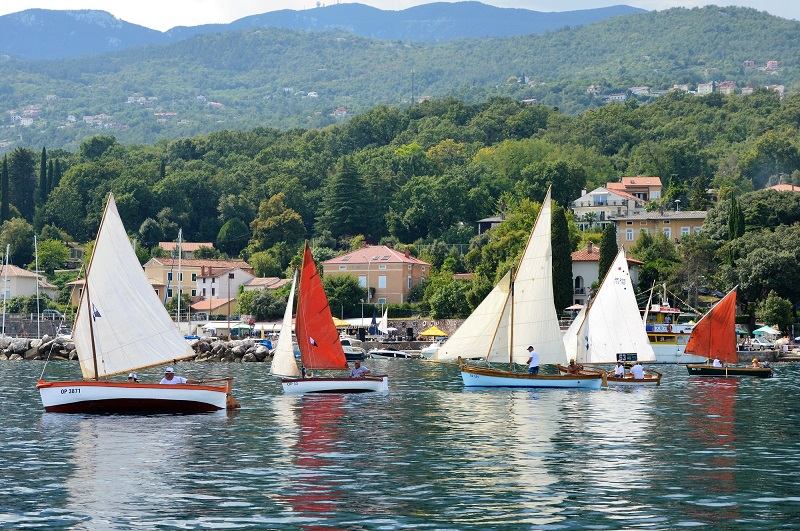
The small harbour of Ičići remains the living heart of the town – a small port where work, everyday life, and social encounters intertwine. Here, one can still feel the tradition of maritime life that has shaped the identity of Ičići: from fishermen to barkajoli (boatmen), who for decades served as an important link between the shore and the sea.
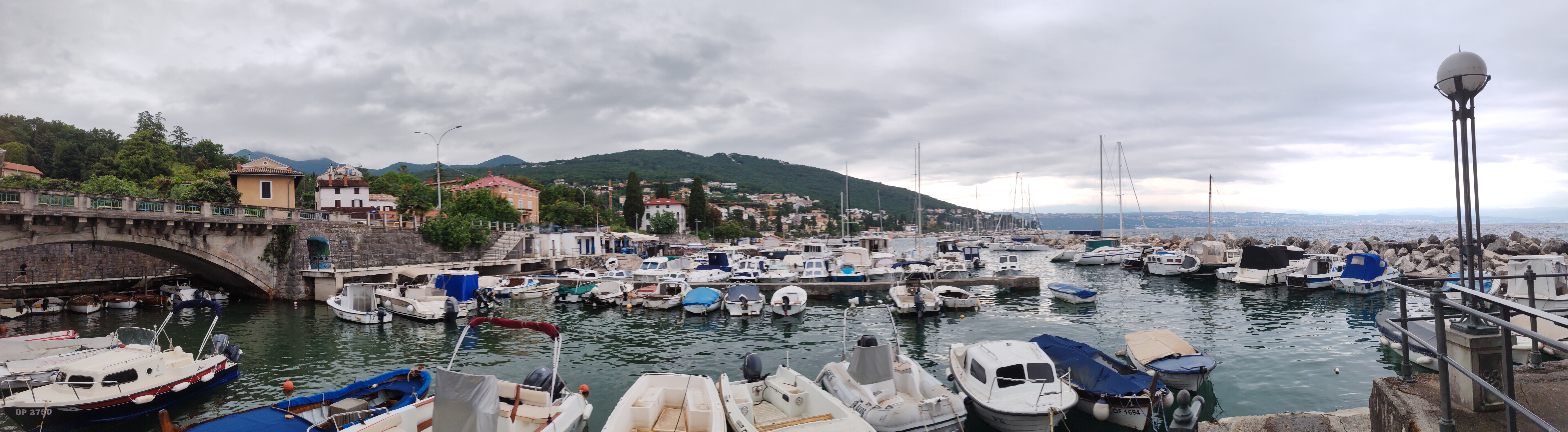
The initiator of the construction of the Ičići harbour was Captain Igor Žiganto, a resident of Ičići.
During the 1980s, work in the harbour took place every weekend. There is hardly a centimetre that was not built with the help of the local community. Those who could not participate physically contributed in other ways. Alongside the hard work, there was also plenty of socializing and good spirits.
Part of the harbour was built by the local population, while another part was later expanded by the Port Authority.
In 2000, the Ičići Tourist Board contributed to the landscaping of the harbour plateau by planting oleanders, which can still be seen there today.
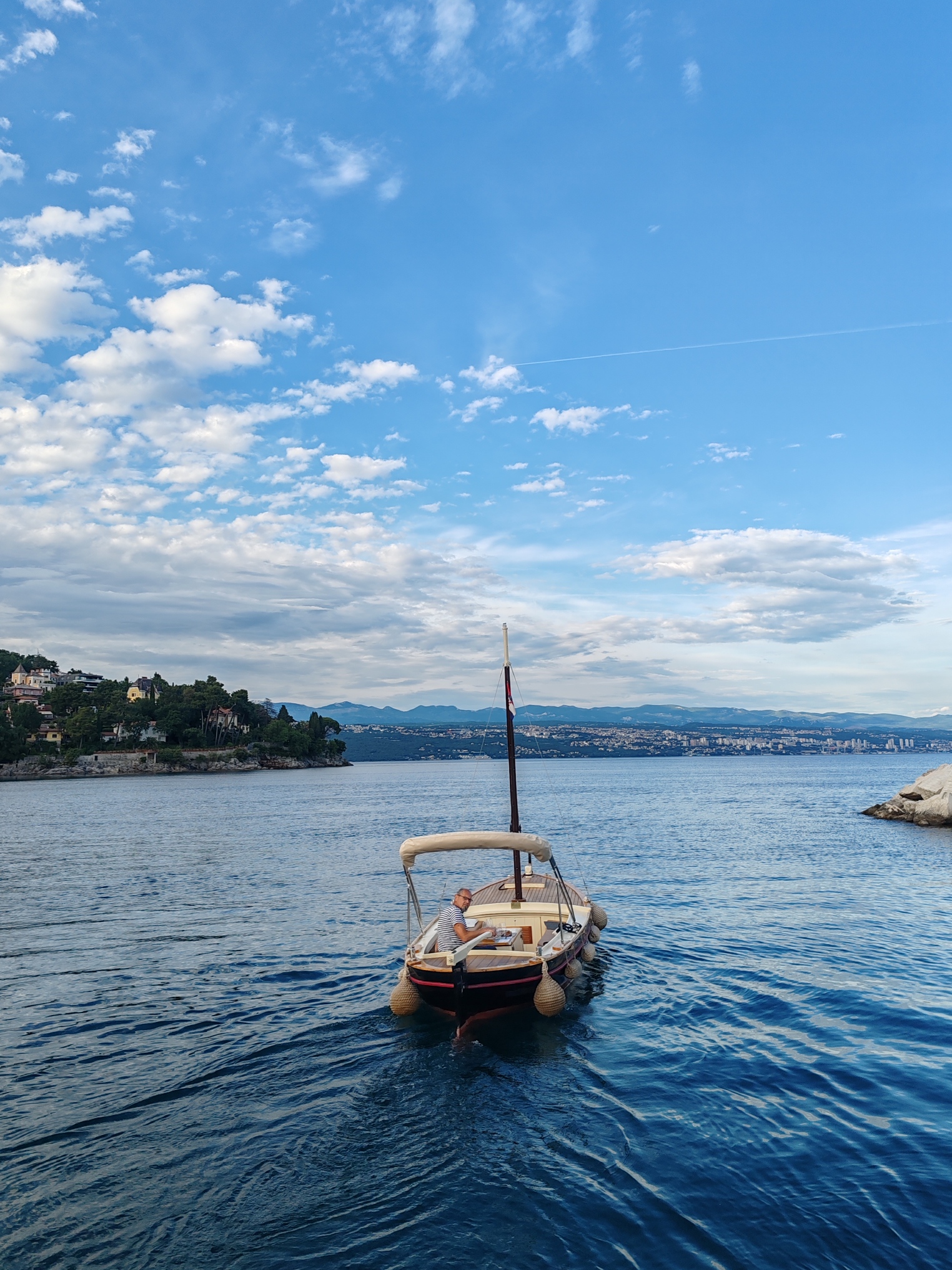
Barkajoli played an exceptionally important and responsible role in the Kvarner region. At a time when there were no developed piers or marinas, they transported passengers to and from the shore in small wooden boats — most often traditional gajeta boats. They also delivered luggage, goods, and supplies, ensuring a safe connection between the town and ships anchored offshore. Their work required deep knowledge of the sea, winds, and currents, as well as reliability, as they were often the first point of contact between visitors and the coast.
With the development of tourism in the late 19th and early 20th centuries, Ičići—within the broader context of the Opatija Riviera—shared the same rhythm of maritime traffic. Barkajoli were part of the town’s daily life but also of its tourism story. Their boats were as much a part of the coastal scenery as the Lungomare promenade.
Today, the Ičići harbour is well-maintained and fully functional, yet its fundamental role remains the same: it is a place of gathering.
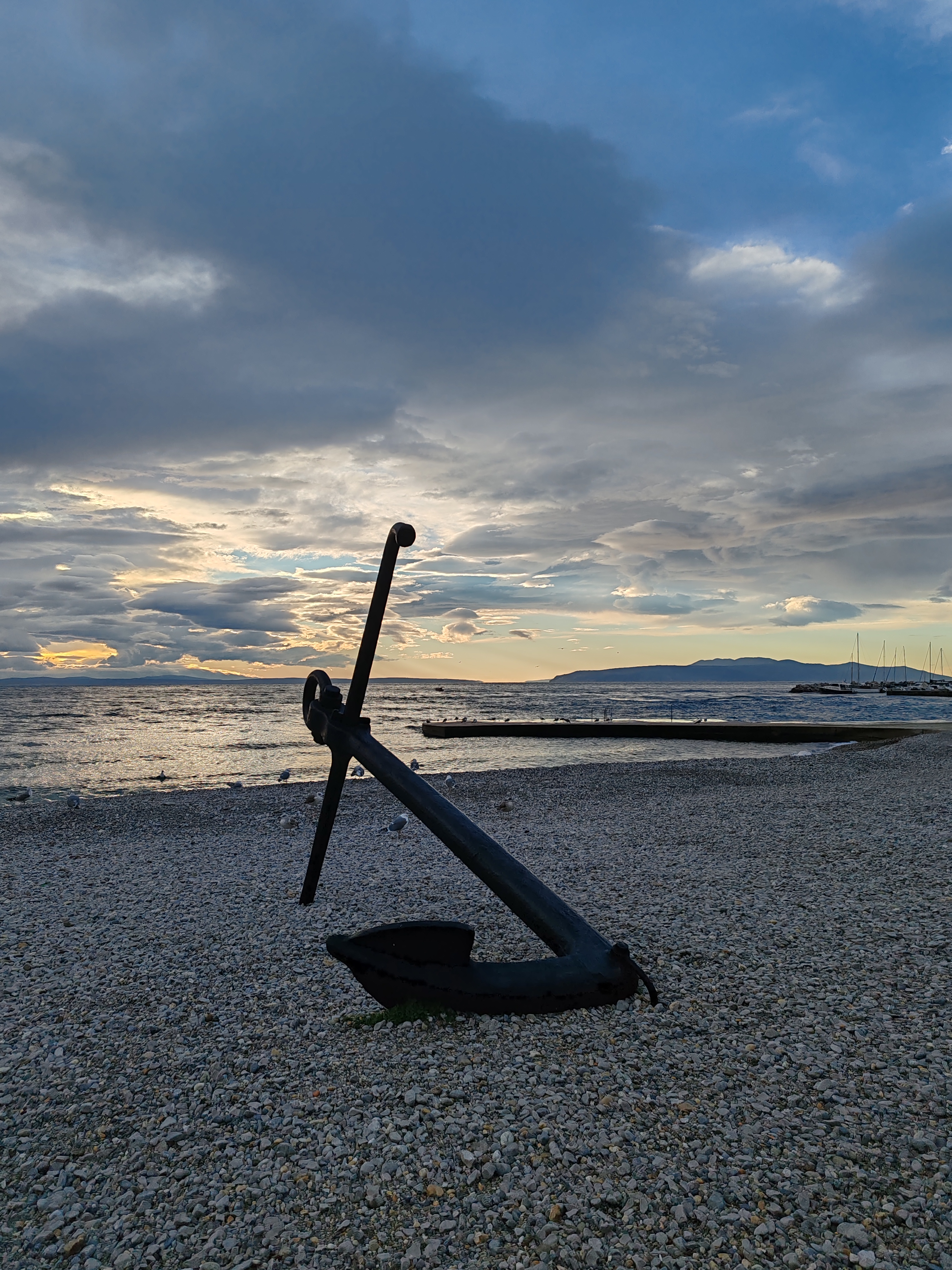
The anchors in the harbour, as well as those placed on the beach, have become lasting symbols of safety, return, and the connection between people and the sea. They remind us of a time when every boat had its own story and every departure its own purpose.
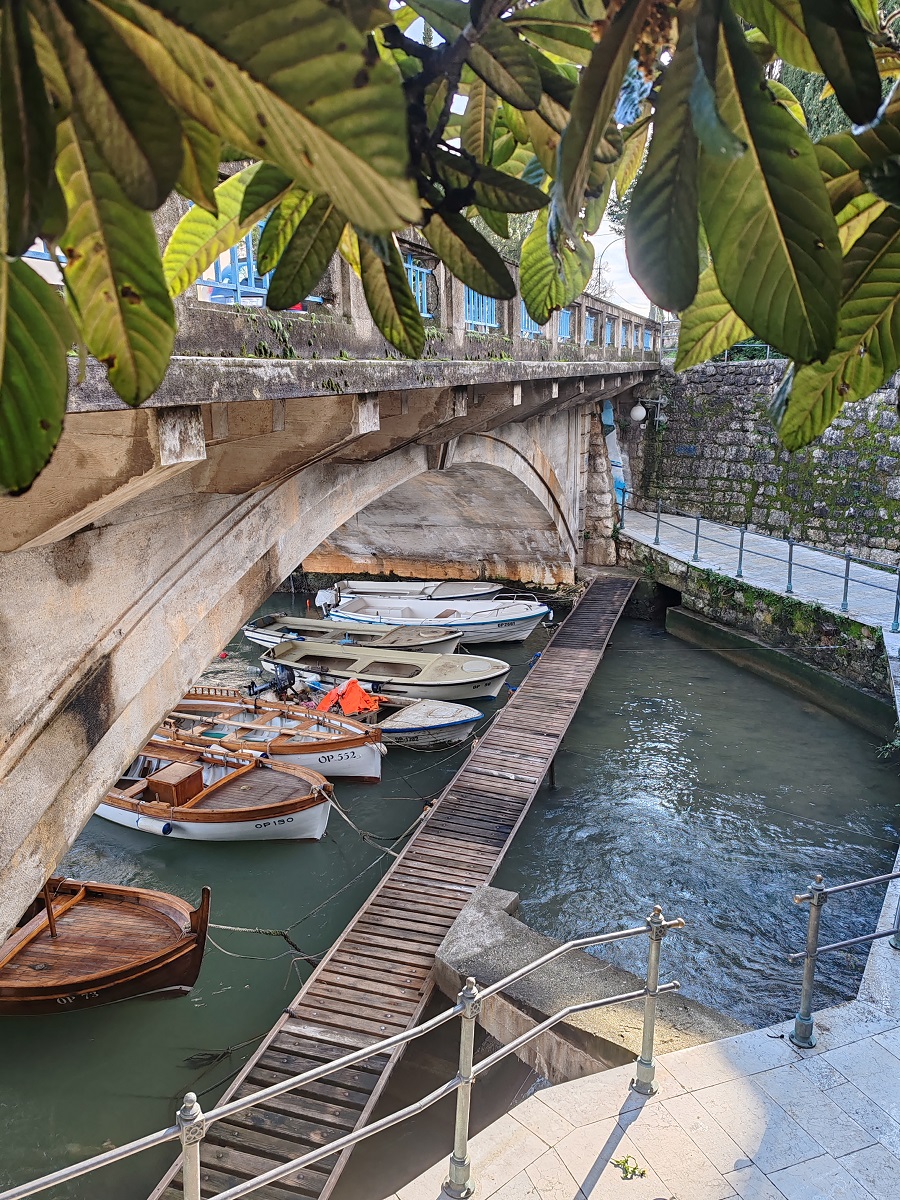
Ičići still breathe to the rhythm of the waves and the sea.
Every boat tied to the quay, every rope and every anchor are part of a continuity that endures—a simple yet powerful bond between the town and the sea.